CAZIMI®Intelligence & Security
HomeServicesMartyn's LawSectorsWorkAboutContactPrivacy Policy

Martyn’s LawPreparedness,
made visible.

The biggest change to UK public venue security in a generation.

We turn the Terrorism (Protection of Premises) Act 2025 into visual intelligence you can act on: your tier, your vulnerabilities, your team’s plan, mapped on the actual site.

Royal Assent3 April 2025
In force3 April 2027
days:hrs:min:sec
TiersStandard · Enhanced
Our coverageUnited Kingdom
UK Threat LevelLowAn attack is highly unlikelyModerateAn attack is possible, not likelySubstantialAn attack is likelySevereAn attack is highly likelyCriticalAn attack is expected imminently
01The duty

Preparedness is now a requirement, not a nice-to-have.

Publicly accessible premises and qualifying events will need to think clearly about how they would respond to a terrorist attack, and larger sites will need to consider vulnerabilities and reasonably practicable measures.

  • 200 to 799 capacity sits in Standard Tier
  • 800 or more sits in Enhanced Tier
  • Implementation period before in-force
02Our approach

A plan no one can picture is a plan no one will use.

We bring an analyst’s eye to your actual site. Where the gaps are, where lines of sight fail, where mitigation is proportionate and where it’s theatre. The output is a single visual report your team can act on and your board can sign off from, backed by the evidence that produced it.

  • Adversary perspective of your site
  • Annotated imagery, viewshed and CCTV mapping
  • Hostile vehicle and crowd vulnerability analysis
  • Visual evidence to back your funding case
  • Sized proportionately to your site, venue or event
What is Martyn’s Law?

The Terrorism (Protection of Premises) Act 2025.

Commonly known as Martyn’s Law, the Act requires publicly accessible premises and events to be ready to respond to a terrorist attack. Larger sites must also identify vulnerabilities and take reasonably practicable steps to reduce them.

Royal Assent: 3 April 2025. In force: expected 3 April 2027. The implementation window is for preparing proportionately, not catching up after the fact.

200+
Capacity threshold for Standard Tier consideration
800+
Capacity threshold for Enhanced Tier consideration
24mo
Expected implementation period from Royal Assent
2027
Earliest realistic in-force date
Why it carries this name

Named in memory of Martyn Hett, one of the 22 people killed in the 2017 Manchester Arena attack.

The legislation reflects lessons identified after that attack. It aims to improve preparedness across publicly accessible places so the next event finds organisations ready, rather than reading procedures off a binder for the first time.

Why it matters

Three reasons the duty exists.

The Act is not blanket regulation. It is a proportionate response to a hard lesson: publicly accessible places must think more intentionally about how they would respond if the worst happens.

Exposure

Public places carry inherent exposure.

Many venues are open, busy and complex. Multiple entrances, queues, gathering points and predictable patterns of movement, all in plain sight.

Time

Preparedness saves time when seconds matter.

Clear procedures, staff awareness and known communication routes reduce confusion during a fast-moving incident, and shave minutes off a response.

Proportionality

Security has to be proportionate.

The Act uses a tiered approach so expectations are linked to the scale and nature of the premises or event. Not every site needs a fortress.

Tier checker

Check your tier.

A short, jargon-free flow to help you understand whether your premises or event may sit in Standard Tier, Enhanced Tier, qualifying-event status, or merits a closer look. Indicative only.

01

Is the location or event publicly accessible?

A site or event is publicly accessible if members of the public can enter, with or without payment, a ticket, an invitation or a booking. It is not about whether entry is free or paid, advertised or word-of-mouth. It is about whether the public, broadly, can get in.

For example

Theatres with paid tickets, free public markets, university open days, hotel lobbies, high-street retailers and cathedrals are all publicly accessible. A private members' club, a secured corporate office or a closed staff-only training site is not.

For general guidance only. This tool offers an indicative position based on the answers you give. It is not legal advice and not a regulatory determination. Refer to official Home Office, ProtectUK and SIA guidance when confirming your obligations under the Terrorism (Protection of Premises) Act 2025.

Understanding the tiers

Three positions, sized to reality.

The duty scales with the nature of the premises or event. Most organisations will sit in one of three positions.

Likely below threshold

Below the main capacity threshold.

Smaller premises and events

You may sit outside the main requirements. Proportionate preparedness can still protect people, reputation and operational continuity if profile, location or activity warrants it.

  • Sensible procedures
  • Staff awareness
  • Light-touch site review
Standard Tier

Public protection procedures.

Qualifying premises, 200 to 799 capacity

You may need to notify the regulator and have appropriate public protection procedures in place, so far as reasonably practicable.

  • Notification
  • Evacuation, invacuation and lockdown procedures
  • Communication and decision points
  • Staff awareness and exercising
Enhanced Tier

Procedures, plus vulnerability reduction.

Qualifying premises and events, 800+

You may need to meet Standard Tier expectations and consider additional vulnerability reduction measures, where reasonably practicable.

  • Documented preparedness plan
  • Vulnerability assessment
  • CCTV, search and access considerations
  • Hostile vehicle, queue and crowd review
  • Monitoring and review

Indicative only. Final position should be confirmed against official Home Office, ProtectUK and SIA guidance once published in full.

The responsible person

Who carries the duty under the Act?

Every qualifying premises and event has a responsible person. They are the individual or organisation accountable for the duty: thinking it through, putting procedures in place, training the team and being able to evidence it. We help them carry that load.

What you own

The responsible person owns the duty.

The Act places the duty on a single, named accountable party. For a venue, that is usually the operator or freeholder. For an event, it is usually the organiser with control of the site during the event. The regulatory writing, the procedures and the exercise programme sit with you. So does final accountability.

  • Determine likely tier and obligations
  • Write the risk assessment
  • Draft the public protection procedures
  • Run the tabletop exercises and after-action reports
  • Train and brief staff
  • Notify the regulator where required
  • Sign the decisions and stand behind them
What we own

We think like the adversary, so you don’t have to.

You are not paid to think like an attacker. We are. We bring the analyst’s perspective to your site: how a hostile actor would view it, where the gaps are, where mitigation is proportionate and where it is theatre. You take that picture into your risk assessment, your procedures and your exercises.

  • Adversary-perspective site review
  • Vulnerability mapping and exposure analysis
  • Annotated imagery, viewsheds and CCTV blind-spot diagrams
  • Hostile vehicle, queue and crowd exposure picture
  • Threat picture and atmospherics inputs for your tabletops
  • Visual evidence to back your funding case
  • Independent second opinion on your existing plan
Funding the work

Visual evidence makes your budget case for you.

Often the hardest part of the role isn’t knowing what to do. It’s getting it funded. Boards approve what they can see. We give you annotated imagery, indicative cost bands and one-page summaries you can take into the budget meeting and stand behind.

01
A clear picture of the gap
Annotated overlays showing where the site is exposed and why it matters, sized to the tier you sit in.
02
Ranked, indicative options
Mitigation options with cost bands and a defensible priority order, ready for you to take into a board paper.
03
One-page board summary
Names the risk, the option, the cost and the recommendation. Built to be read, not waded through.
04
Evidence pack
The imagery, mapping and analysis behind your decisions. Versioned, dated and ready to attach.
How Cazimi helps

Six steps from duty to ready.

Most organisations do not need another generic checklist. They need to understand how their site actually works, where visibility is poor, how someone could approach, what staff can realistically do and which mitigations are proportionate.

01

Discovery and tier review

We review your premises, event type, public access, capacity and operational context to help you understand your likely position.

02

Site intelligence collection

We use mapping, imagery, open-source research and, where appropriate, drone or top-down imagery to build a clear picture of the site.

03

Vulnerability and exposure assessment

We identify crowding points, access routes, queues, perimeter weaknesses, line-of-sight issues, hostile vehicle exposure and CCTV blind spots.

04

Visual security planning

Annotated aerial imagery, access maps, range rings, CCTV coverage diagrams, movement routes and proportionate mitigation overlays.

05

Practical preparedness recommendations

Recommendations decision-makers can understand, prioritise and act on, sized to your tier and your operating reality.

06

Aftercare and review

Documented refresh as your site, event, layout or official guidance changes. We stay on the end of the phone in between.

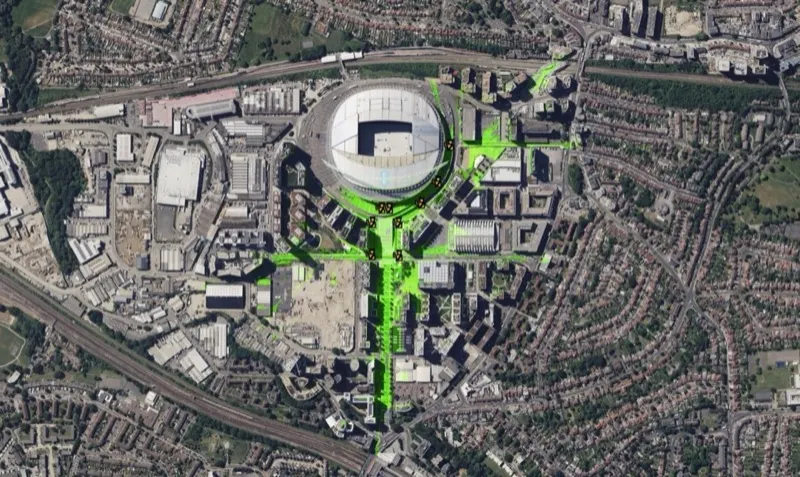
Stewarding & sightline overlay · indicative output
Why visual matters

On the day, staff look at a map, not a binder.

Most Protect Duty plans are text. Ours are drawn on your actual venue: approach routes, stewarding sectors, camera coverage, evacuation and invacuation lines, hostile vehicle mitigation points, all on one page the whole team can see.

When the picture is visual, decisions are faster, briefings are shorter and exercises are sharper.

Preparedness packages

Four ways to work with us.

From a quick tier review to a full Enhanced Tier visual assessment, scoped to where you are now and where you need to be by in-force.

Package 01

Initial tier and readiness review

For organisations unsure whether they are in scope.
  • Discovery call
  • Public access and capacity review
  • Likely tier indication
  • Initial preparedness gap summary
  • Recommended next steps
Package 02

Standard Tier preparedness pack

For venues likely to fall into Standard Tier.
  • Site overview
  • Public protection procedure review
  • Staff readiness considerations
  • Evacuation, invacuation and lockdown considerations
  • Visual site summary
  • Practical recommendations
Package 03

Enhanced Tier visual security assessment

For larger venues and events.
  • Full site intelligence review
  • Annotated aerial and top-down imagery
  • Vulnerability mapping
  • CCTV and visibility analysis
  • Access, egress and crowd flow review
  • Hostile vehicle exposure considerations
  • Decision-ready report
Package 04

Event and pre-event intelligence pack

For festivals, race meetings, fixtures and high-footfall public activity.
  • Event footprint review
  • Crowd movement and queuing considerations
  • Protest and atmospherics overview where relevant
  • Access routes and key locations
  • Security team briefing visuals
  • Pre-event decision support
Request a Martyn’s Law preparedness quote →
What your report can include

A visual security pack, not a paperwork exercise.

Every engagement closes with a single visual report you can act on. The exact contents are sized to your tier, your site and the questions you actually need answered.

01

Aerial site overview

A clear top-down picture of the site as it actually operates.

02

Vulnerability mapping

Annotated overlays of the points that warrant attention.

03

CCTV viewshed and blind spots

Where coverage is real and where it is theoretical.

04

Access and egress analysis

Routes in and out, mapped against operating patterns.

05

Queue and crowd exposure

Where people gather, how long for and how exposed they are.

06

Hostile vehicle approach

Vector review of approach, speed and standoff.

07

Perimeter review

Unauthorised access points, sightlines and approach paths.

08

Evacuation and invacuation

Considerations for moving people away from or into safety.

09

Stewarding positioning

Visual support for steward and security team placement.

10

VIP and route considerations

Where talent or principals are part of the picture.

11

Crime and incident context

Local crime patterns and recent incidents that matter.

12

Atmospherics

Local mood, tensions and activism likely to shape the day.

13

Mitigation priorities

Ranked, with indicative cost bands and proportionate options.

14

Executive summary

One page a decision-maker can read in two minutes.

Built for

Who is this product for?

If you operate a publicly accessible site or run events at scale, the Act is likely to be relevant to you.

Stadiums and sports groundsRacecoursesFestivals and outdoor eventsArenas and theatresUniversities and collegesSchools and education settingsPlaces of worshipHotels and hospitalityRetail and shopping centresVisitor attractionsLocal authoritiesCorporate sites and officesTransport-adjacent locationsHigh-profile private events
What should you do now?

A practical starting list.

Not exhaustive, not legal advice. Run through this with your team. Wherever you get stuck, that is usually where we can help.

  • Identify whether your premises or event is publicly accessible.
  • Understand your maximum expected capacity.
  • Identify the responsible person or organisation.
  • Map entrances, exits, queues, public areas and gathering points.
  • Review current emergency procedures.
  • Consider evacuation, invacuation, lockdown and communication processes.
  • Review staff awareness and training needs.
  • Identify obvious vulnerabilities on site.
  • Record existing security measures.
  • Start building a proportionate preparedness plan.
  • Monitor Home Office, ProtectUK and SIA guidance.
  • Plan a review cycle, not a one-off exercise.
Common questions

Straight answers.

The Terrorism (Protection of Premises) Act 2025 received Royal Assent on 3 April 2025. There is expected to be an implementation period of at least 24 months before the Act comes into force. Organisations can use that period to prepare proportionately.

This page is for general information only and does not constitute legal advice. Cazimi Intelligence & Security provides preparedness support, visual security analysis and analyst-led recommendations. Organisations should refer to official Home Office, ProtectUK and SIA guidance when determining their obligations under the Terrorism (Protection of Premises) Act 2025.

Prepare early. Understand your site. Make better security decisions.

Martyn’s Law preparedness should not be a last-minute paperwork exercise. We help you understand your premises, identify vulnerabilities and build clear, visual, proportionate plans before the legislation comes into force.

Book a Martyn’s Law consultation →Use the tier checker